
www.shreemnutrition.com
Magnesium Bisglycinate
Shreem Nutritions is a bulk supplier and distributor of Magnesium Bisglycinate, based in Panipat, Haryana, India.
Request a sampleMore in Minerals, Chelates & Trace Elements
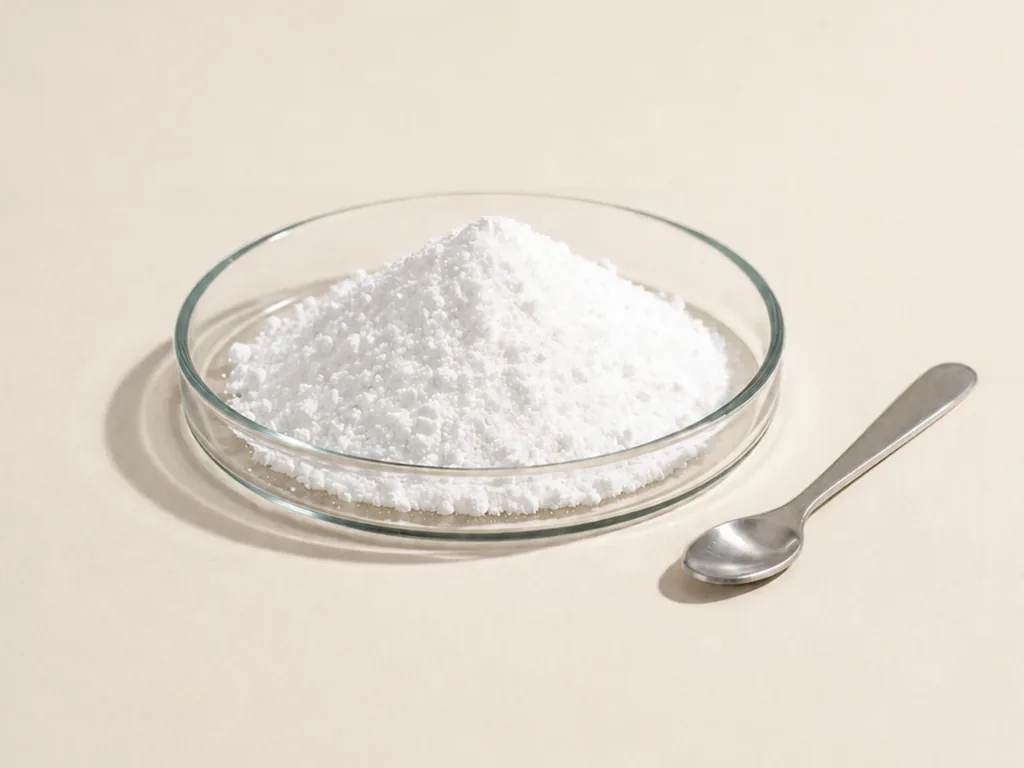
Magnesium bisglycinate is magnesium chelated with two molecules of the amino acid glycine, used by formulators in capsules, tablets, drink mixes, gummies and mineral premixes. We offer Magnesium Bisglycinate as a powder, supplied to Chelated specification. As part of our Minerals, Chelates & Trace Elements portfolio, every batch ships with the maker's documentation and is sourced from reputed, established manufacturers.
Magnesium Bisglycinate at a glance
Magnesium bisglycinate is a core line for Shreem Nutritions. We supply it in bulk to nutraceutical, supplement and food brands across India, and the magnesium bisglycinate we supply is FSSAI Form II approved. We trade it from established producers, quote for the grade and magnesium content you formulate to, and share the specification, the producer's COA and the approval document on enquiry.
- Chemical name
- Magnesium bis(glycinate)
- Also traded as
- Magnesium glycinate · magnesium glycinate chelate
- Molecular formula
- C4H8MgN2O4
- CAS no.
- 14783-68-7
- Mol. weight
- 172.42 g/mol
- HSN code
- 2922 49 90
- FSSAI
- FSSAI Form II approved
- Fully reacted chelate
- 11–14% magnesium
- Buffered grades
- 20%, 22%, 25% magnesium
- Grade
- Chelated; standard confirmed with the quotation
- Form
- Powder
Technical Specifications
- Grade
- Chelated
- Physical form
- Powder
- Primary use
- Mineral Supplement
- Category
- Minerals, Chelates & Trace Elements
The full specification, pack size, MOQ and origin are confirmed with the quotation and on the maker's COA for the batch.
Quality Documents
For Magnesium Bisglycinate specifically.
Included with every shipment
- The maker's Certificate of Analysis (COA) for the batch
- Safety Data Sheet (MSDS/SDS)
Available on request
- Heavy Metal & Microbial Test Report
- Further documents, where the maker provides them
Applications
Used in: Dietary Supplements & Nutraceuticals
- Dietary Supplement Manufacturing
- Pharmaceutical Formulation
- Animal & Feed Nutrition
Also available
Other magnesium salts
- Magnesium Oxide (Heavy/Light) / HydroxideIP/BP · Powder
- Magnesium Citrate (Anhydrous/Hydrous)BP/USP/EP · Powder
- Magnesium Malate / Glycinate / Aspartate / GlycerophosphateUSP · Powder
- Magnesium Threonate / Taurate / OrotateUSP · Powder
- Magnesium Chloride Hexahydrate / GluconateUSP/IP · Powder
- Magnesium Lactate Dihydrate / Peroxide / PhosphateUSP/IP · Powder
- Magnesium Stearate / Sulphate (Dried) / Tri SilicateUSP/IP · Powder
- Magnesium Citrate MalateUSP · Powder
Specification & COA
The specification sheet and the maker's batch Certificate of Analysis for Magnesium Bisglycinate are shared on enquiry, before you order. The maker's batch COA also accompanies every shipment and is the document that governs the batch.
Fully reacted, buffered, and what the names mean
Magnesium bisglycinate is a chelate: one magnesium ion bound to two molecules of the amino acid glycine, each glycine holding the magnesium through its amino and its carboxyl group. The prefix bis- simply means two. In trade the same material is sold as magnesium bisglycinate, magnesium glycinate and magnesium glycinate chelate, so the name on an offer does not on its own tell you what the powder is.
What does tell you is whether the grade is fully reacted or buffered. Fully reacted material is the chelate alone. Buffered material is the chelate blended with another magnesium source, commonly magnesium oxide, which raises the magnesium content per gram and changes how the powder behaves in a blend. Both are traded, but they are not interchangeable on a label, because label claims are calculated from the elemental magnesium content stated on the specification.
We supply both types. Fully reacted (unbuffered) chelated magnesium bisglycinate is offered at 11–14% magnesium; by its formula the chelate alone is about 14.1% magnesium, so any higher figure means a buffered grade. Buffered grades, blended with another magnesium source, commonly magnesium oxide, to reach a higher magnesium content, are offered at 20%, 22% and 25% magnesium. These are nominal grade figures; the exact value for a lot is on the specification and COA shared on enquiry.
Because glycine is a heavier partner than oxygen in magnesium oxide, the chelate carries less magnesium per gram than simple inorganic salts, so each serving on a label needs more powder. That sets capsule size, tablet weight and the number of units per serving, and is worth working out before choosing a format.
Grades also differ in particle size, bulk density, flow and taste, which matter for encapsulation, compression and drink mixes. These are batch and product values, so we share them on the specification and the producer's COA on enquiry. Malate, aspartate and glycerophosphate are covered on the magnesium malate, glycinate, aspartate and glycerophosphate page.
For a quotation, please tell us whether you need fully reacted or buffered material and which magnesium content grade, the elemental magnesium content your label is calculated on, the standard or monograph you buy to (if any), the format you are filling, the quantity, and the delivery city and timeline.
Magnesium bisglycinate
- Molecular formula
- C4H8MgN2O4
- CAS no.
- 14783-68-7
- Mol. weight (g/mol)
- 172.42
| Form | Molecular formula | CAS no. | Mol. weight (g/mol) |
|---|---|---|---|
| Magnesium bisglycinate | C4H8MgN2O4 | 14783-68-7 | 172.42 |
Identifiers: PubChem, U.S. National Library of Medicine.
Typical uses
Bought by manufacturers as an ingredient for:
- Capsules
- Tablets
- Powdered drink mixes and sachets
- Gummies and chewables
- Mineral premixes
- Multi-mineral blends
Packing is confirmed with the quotation.
Buyer questions
Is the magnesium bisglycinate you supply FSSAI approved?
Yes. The magnesium bisglycinate we supply is FSSAI Form II approved. The approval document is shared on enquiry, together with the specification and the producer's COA.
What is FSSAI Form II?
Under the Food Safety and Standards (Approval for Non-Specified Food and Food Ingredients) Regulations, 2017, a food business operator applies to the Food Safety and Standards Authority of India in Form I. The Authority records its decision, approval or rejection, in Form II, on the basis of a safety assessment of the food or ingredient. A Form II approval is that decision in favour of the ingredient.
Is magnesium glycinate the same as magnesium bisglycinate?
In trade the names are used for the same chelate, magnesium bound to two glycine molecules. The name alone does not tell you whether a grade is fully reacted or buffered, so check the elemental magnesium content stated on each specification.
What is the difference between fully reacted and buffered magnesium bisglycinate?
Fully reacted material is the chelate alone. Buffered material is the chelate blended with another magnesium source such as magnesium oxide, which raises its magnesium content per gram. Tell us which one your label is written for and we quote that grade.
Which magnesium content grades do you supply?
Fully reacted (unbuffered) chelated magnesium bisglycinate at 11–14% magnesium, and buffered grades at 20%, 22% and 25% magnesium. These are nominal grade figures; the exact value for a lot is on the specification and COA shared on enquiry.
Why does a serving of bisglycinate need more powder than magnesium oxide?
Each magnesium ion carries two glycine molecules, so much of the weight of the powder is glycine. Labels are calculated from elemental magnesium, and the elemental content on the specification sets how much powder each serving needs.
Can I see the specification and COA before ordering?
Yes. Both are shared on enquiry, and the producer's batch COA accompanies the shipment.
Which HSN code do you use for magnesium bisglycinate?
We invoice magnesium bisglycinate under HSN 2922 49 90.
What should I send for a quotation?
Fully reacted or buffered, the magnesium content your label is calculated on, the format you are filling, quantity, delivery city and timeline. Packing is confirmed in the quotation.


Interested in Magnesium Bisglycinate?
Send us your required quantity and specification; we typically reply within 24 hours with a formal quotation.
Request a QuoteThe maker's Certificate of Analysis accompanies every batch. Specification, pack size and terms are confirmed with the quotation. Page: https://www.shreemnutrition.com/products/minerals/magnesium-bisglycinate/